
Bending Machine
Discover unparalleled precision and speed with our cutting-edge bending machines. Streamline your production process, create intricate designs effortlessly, and boost output with our innovative technology.

What is a Bending Machine?
A bending machine, also known as a press brake, is a machine tool used to bend and shape sheet metal or metal plates. Its primary function is to apply force to a workpiece to deform it, typically into a predetermined shape, angle, or curve. This process is essential in metalworking for creating various components used in industries like manufacturing, construction, and automotive.


Bending Machine Components
The main components of a bending machine include:
- Frame: Provides the structural support and stability for the machine.
- Bed or table: The flat surface where the material to be bent is placed.
- Clamping system: Holds the material firmly in place during the bending process.
- Ram: The moving part that exerts force on the material to bend it.
- Die: A tool that shapes the material by providing the desired bend or angle.
- Back gauge: A device that assists in accurately positioning the material for consistent bends.
These components work together to bend metal sheets or plates accurately and efficiently according to specific requirements.
Bending Machine Types
There are various types of bending machines used across industries for different purposes. Here are a few common ones:
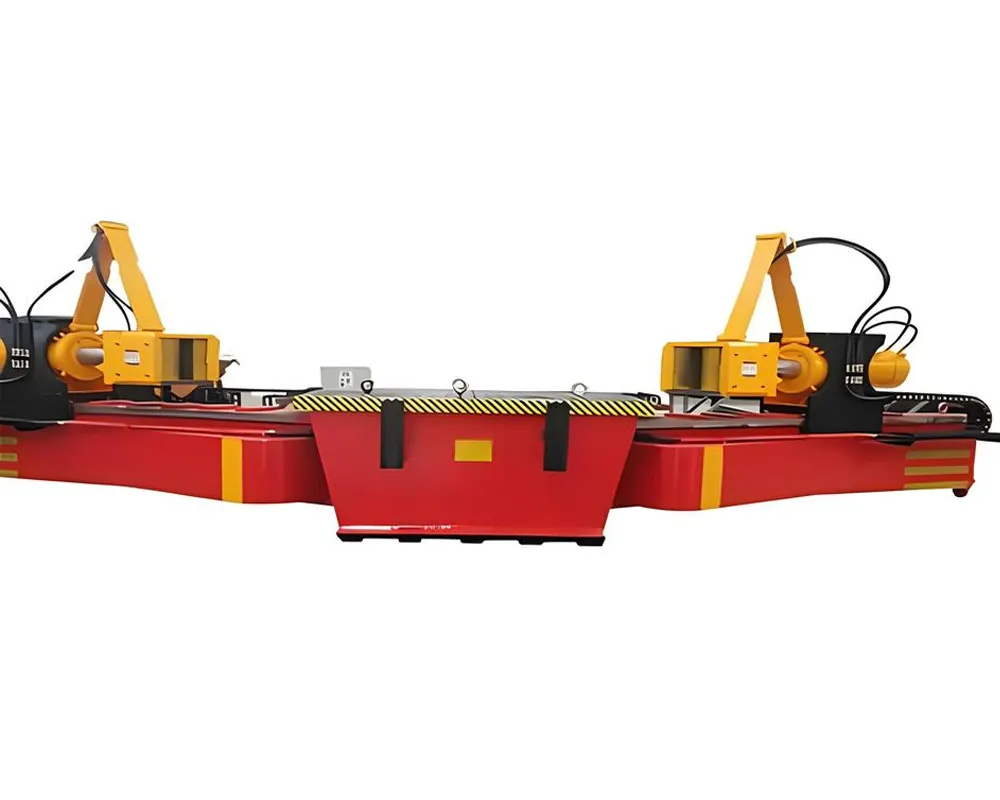
Metal Sheet Bending Machine
Metal sheet bending machines bend metal sheets using a punch and die mechanism, commonly referred to as press brakes. They are widely used in industries requiring metal sheet components like automotive, aerospace, and construction.

Pipe Bending Machine
Pipe bending machines are specifically designed for bending pipes and tubes. They are used in industries such as plumbing, automotive exhaust systems, and HVAC for bent pipe components.

Profile Bending Machine
Profile bending machines are designed to bend various profiles and bars, like angle iron, flat bars, and beams. They are commonly used in industries such as metalworking, construction, and manufacturing for curved or shaped profiles.
Principles of Bending Machines
The fundamental principle of bending machines involves applying force to deform the material along a straight axis, typically using a punch and a die.
Here’s a breakdown of the working principle of bending machines:
- Punch and Die Setup: The bending machine consists of a punch (the part that applies force) and a die (the part against which the material is bent). The punch moves downward, pressing the material against the die.
- Material Placement: The material (often a sheet of metal) is placed between the punch and die, aligned for the desired bend.
- Application of Force: The bending machine applies force via hydraulic, mechanical, or pneumatic mechanisms. This force is concentrated at the point where the punch makes contact with the material.
- Bend Formation: As the punch applies force, the material begins to deform and bend around the die’s shape. The bending angle is determined by the depth to which the punch pushes the material and the shape of the die.
- Precision Control: Modern bending machines often have computer-controlled systems that precisely control the force applied, the angle of bending, and the position of the material. This ensures accuracy and consistency in the bends.
- Springback Compensation: After the bending force is removed, some materials may exhibit “springback,” where they slightly return to their original shape. Skilled operators may compensate for this by over-bending the material slightly.
- Product Unloading: Once the bending process is complete, the finished product is removed from the machine.
Bending machines come in various sizes and capabilities, from manual or semi-automatic machines suitable for smaller tasks to fully automated CNC (Computer Numerical Control) machines capable of handling complex bends with high precision. The principles remain the same across these machines, though the level of automation and control may differ.
Applications of Bending Machines
Bending machines are versatile tools extensively used in various industries due to their ability to shape various materials.
In the manufacturing sector, bending machines play a pivotal role in metalworking processes. They’re employed in producing components for automobiles, aerospace, construction, and electronics. These machines bend metal sheets, tubes, and profiles to create complex shapes and structures crucial for these industries.
In the construction realm, bending machines are fundamental in fabricating steel bars and rebars, essential for reinforced concrete structures. They aid in creating curved or angular components, enhancing architectural design possibilities.
The appliance industry benefits from bending machines as well, utilizing them in shaping metal parts for household appliances. These machines ensure precision and consistency in manufacturing, crucial for meeting quality standards and functional requirements.
Moreover, in the realm of furniture and interior design, bending machines contribute to crafting unique and aesthetically pleasing designs. They enable the creation of curved furniture components and decorative elements that add flair to spaces.
Testimonials
"Crafting unique metal artworks demands both creativity and precision. The bending machine from you perfectly complements our artistic vision. Its ability to handle intricate designs while maintaining accuracy is impressive. We've achieved bends that were previously thought impossible, thanks to the flexibility and finesse of this machine. A must-have for artisans seeking precision in their work!"
– Mellisa Sayed